

Introduction: A New Era for Functional Medicine
Over the past decade, functional medicine has transformed from a niche discipline into one of the fastest-growing movements in healthcare. Practitioners are leaving large hospital systems to start private clinics, combining clinical precision with lifestyle coaching, nutrition counseling, and personalized patient care.
But as this new generation of providers embraces independence, a familiar truth from the business world emerges: when you own the operation, you also own the risk.
Many functional medicine clinics are structured as lean, agile businesses — sometimes one or two practitioners with a few part-time assistants — operating out of leased spaces, co-working offices, or home-based studios. They use digital scheduling systems, store patient records in the cloud, and rely on content marketing to reach new patients. This entrepreneurial model gives incredible freedom but also introduces new vulnerabilities that traditional malpractice insurance simply doesn’t address.
If malpractice coverage protects you as a clinician, the right business insurance protects you as an owner.
A slip on your office steps, a stolen laptop containing medical records, a patient injured by a malfunctioning piece of equipment, or even a cyberattack on your scheduling system — these are all events that fall outside the scope of malpractice coverage. Yet, they can cause just as much financial and reputational harm.
This guide is designed to bridge that gap — to help functional medicine practitioners understand which insurance policies matter most for their practice, and why these “non-medical” coverages often make the difference between a brief disruption and a business-ending event.
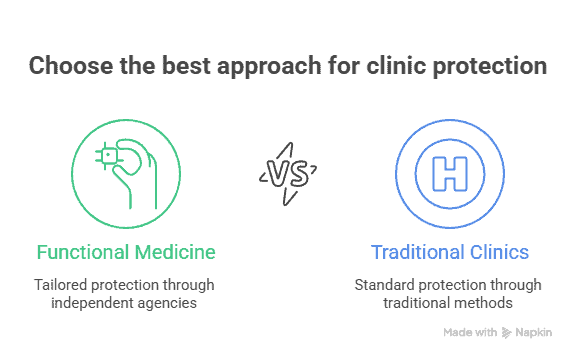
We’ll explore real-world examples, explain how functional medicine practices differ from traditional clinics, and discuss how independent agencies can help tailor protection that aligns with your clinic’s size, budget, and goals.
I. The Business Behind the Practice
Functional medicine practitioners are, first and foremost, healers — but when you open a clinic, you also become a small business owner. You sign leases, pay staff, purchase equipment, collect payments, manage marketing, and file taxes. The moment you hang your own shingle, you’re running a small enterprise — whether or not you see it that way.
The problem? Most doctors were never trained to think like business owners.
Medical school doesn’t include a course on general liability or data breach liability. And while malpractice insurance is well understood, many practitioners assume it’s an all-purpose safety net. It’s not.
Malpractice insurance protects against claims of professional negligence — essentially, if a patient alleges that your medical advice or treatment caused harm. But it doesn’t cover the far more common, non-clinical risks that every physical business faces: property damage, employee injuries, business interruption, or digital loss.
Most functional medicine clinics operate with thin margins and lean staffing, which means any single uninsured event can create weeks or months of downtime. That’s why separating personal, clinical, and operational coverage is critical.
Your Clinic Is a Living System
Think of your business as a body. The clinical side — your protocols, testing, and supplements — represents its nervous system. But the structure around it — your property, employees, and operations — is the skeleton that keeps everything upright.
Malpractice coverage only protects one small organ within that body. The rest needs its own immune system: a set of policies that ensure continuity when something unexpected happens.
How to Begin Thinking Like a Business Owner
Even if you run a solo practice, treat your clinic as a legal and financial entity.
- Register as an LLC or S-Corp to separate business and personal liability.
- Create distinct bank accounts and credit lines for your business.
- Keep accurate equipment inventories, lease agreements, and employee records.
- Review your existing homeowners or personal auto policy — many specifically exclude business use.
The goal isn’t to overcomplicate your operation — it’s to simplify recovery when something goes wrong. Insurance, when structured correctly, turns potential chaos into paperwork.
II. Core Insurance Needs for Functional Medicine Practices
Functional medicine clinics look and feel different from traditional medical offices — and so do their insurance needs. Most operate with a smaller footprint, a more holistic service model, and a deeper digital presence. The same factors that make them flexible and personal also make them vulnerable to a wider range of risks.
Let’s break down the essential coverage areas every clinic should evaluate.
1. Property & Equipment Protection
Most functional medicine offices lease commercial suites or operate inside mixed-use medical complexes. These spaces often house expensive diagnostic and treatment tools — from InBody scanners and ozone machines to supplement displays, tablets, and lab freezers.
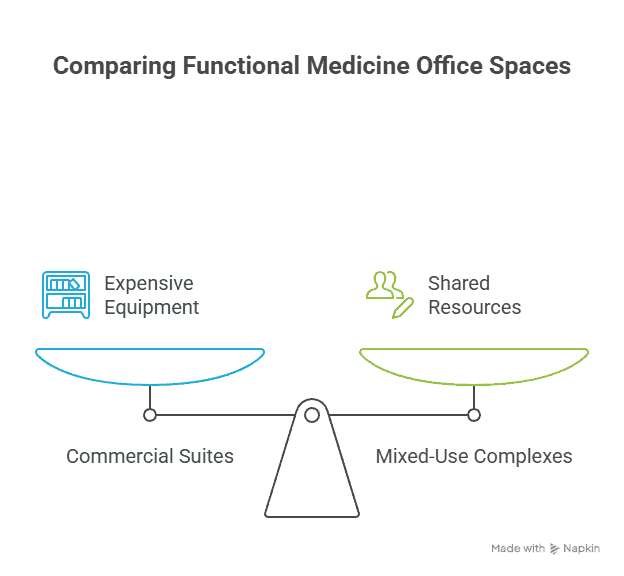
While landlords typically insure the building itself, they don’t cover what’s inside your suite. That’s where Commercial Property Insurance comes in.
It covers:
- Office furnishings and cabinetry
- Medical and diagnostic equipment
- Computers and tablets
- Supplements and retail inventory
- Refrigeration or cold storage equipment
It also includes coverage for fire, water damage, theft, and vandalism.
Example: A small electrical fire damages your infrared sauna and part of your supplement display. The landlord’s policy rebuilds the walls — but your own property policy replaces the equipment and inventory.
Many carriers allow you to add Business Interruption Coverage, which reimburses lost income if your practice is forced to close temporarily after a covered loss. For clinics that depend on daily appointments, this is the difference between surviving a disruption and losing months of revenue.
2. General Liability — The Forgotten Essential
General liability insurance (GL) protects you from claims of bodily injury, property damage, or personal injury that occur during non-medical interactions.
Even though functional medicine visits are centered on wellness, you’re still responsible for the safety of everyone who enters your space.
- A patient slips on a freshly mopped floor.
- A delivery driver trips over a power cord in your lobby.
- A neighboring tenant claims your water leak damaged their suite.
All of these fall under general liability, not malpractice.
Typical limits start at $1 million per occurrence / $2 million aggregate, though higher limits or umbrellas are wise for clinics with steady foot traffic or event-based wellness workshops.
Example: You host a Saturday detox seminar. A participant leans on a folding table that collapses, causing injury. The claim isn’t clinical — it’s environmental — and it lands squarely under general liability.
Many landlords require GL before approving your lease. But even home-based or mobile practitioners should maintain a standalone policy. Your homeowners insurance likely excludes any claim involving clients or business visitors.
3. Professional Liability (Beyond Malpractice)
“Professional liability” is often used interchangeably with “malpractice,” but the terms can diverge in functional medicine.
Traditional malpractice policies focus on medical errors or treatment negligence — the kind of lawsuit that results from a patient claiming harm from clinical advice. But many functional medicine practitioners provide a blend of services — nutrition, wellness coaching, lab interpretation, lifestyle counseling — not all of which fit neatly into medical definitions.
For example:
- A patient misinterprets supplement instructions and experiences side effects.
- A wellness plan you create is later cited in a refund or emotional distress claim.
- A client alleges you promised results not achieved.
In these cases, professional liability coverage — not malpractice — responds. It protects your business from claims tied to advice, documentation, or representation errors.
This distinction matters most for hybrid clinics that blend licensed providers with non-licensed wellness staff. Each team member’s role should be clearly defined in your policy. A physician’s malpractice insurance won’t cover the health coach’s recommendations — and vice versa.
4. Workers’ Compensation
Even if you only have one or two employees — a receptionist or assistant — most states require Workers’ Compensation Insurance once payroll begins.
This covers medical bills and lost wages if an employee is injured on the job, whether from lifting a box of supplements or slipping in the breakroom.
In Ohio, employers purchase workers’ comp directly through the Bureau of Workers’ Compensation (BWC), not through private carriers. However, coverage can still be coordinated with your agency to ensure your class codes and payroll reporting are accurate — critical for avoiding surprise audits or penalties.
Pro tip: Even if your staff are “contractors,” if they regularly work on-site under your direction, the state may reclassify them as employees for workers’ comp purposes.
5. Cyber & Data Liability
If your clinic uses an electronic health record (EHR), online booking platform, or credit card processor — you have a cyber liability exposure.
Functional medicine practices are prime targets for hackers because they often store high-value data (health records, payment info, lab results) on smaller, less-protected systems.
A Cyber Liability or Data Breach Policy covers:
- Data recovery and system restoration after a hack
- Ransomware payments or extortion response
- Legal defense and notification costs for affected patients
- Regulatory fines under HIPAA or state data laws
Even if your IT vendor provides some built-in security, you remain legally responsible for the protection of patient data.
Example: A phishing email tricks your receptionist into downloading malware. The hacker gains access to 1,200 patient files. The cleanup, legal notifications, and reputational damage easily exceed $100,000 — far more than the cost of coverage.
Carriers now offer bundled cyber endorsements that integrate with business policies — making it affordable for small clinics to add this protection. Look for options that include “first-party” (your own recovery costs) and “third-party” (claims from patients or vendors) coverage.
6. Commercial Auto
Many functional medicine doctors use their personal vehicles for errands — picking up office supplies, delivering supplements, or visiting off-site workshops. Unfortunately, personal auto insurance excludes coverage for business use.
If you or an employee cause an accident while driving for work purposes, your personal carrier may deny the claim entirely.
The solution: Commercial Auto Insurance.
It provides:
- Coverage for business-related driving
- Protection for employees using their vehicles on your behalf (“non-owned auto”)
- Higher liability limits to safeguard both business and personal assets
Even if you don’t own a dedicated business vehicle, you can add a Hired & Non-Owned Auto Endorsement to your general liability policy — an affordable way to bridge the gap.
Example: Your assistant rear-ends another car while delivering supplements to a client’s home. Personal insurance denies coverage because the trip was work-related. A commercial or non-owned auto policy would step in.
7. Equipment Breakdown & Utilities
Modern functional medicine offices are tech-heavy. If your HVAC system, infrared sauna, or centrifuge fails due to a power surge or internal breakdown, the loss may not qualify as “property damage.”
Equipment Breakdown Insurance covers internal mechanical or electrical failures — not just external events. It also includes surge protection, compressor damage, and even the cost to expedite repair parts.
Adding Utility Service Interruption can protect perishable stock (like supplements or refrigerated lab samples) if an extended outage occurs.
8. Umbrella & Excess Liability
Once your clinic reaches a certain size — or you own valuable personal assets — a single million-dollar policy limit may not be enough.
Umbrella or Excess Liability Insurance sits on top of your general and auto policies, adding $1M to $5M or more in additional protection.
Functional medicine doctors often underestimate how quickly costs can escalate after an accident. A severe patient injury, multi-car collision, or data breach lawsuit can easily exceed base limits.
Example: A patient sues after slipping on your property, alleging permanent injury. The jury awards $1.4 million. Your general liability covers the first million; the umbrella covers the remaining $400,000 — without touching your savings or assets.
Umbrella policies are remarkably inexpensive for the peace of mind they offer — often a few hundred dollars per year.
9. Business Owner’s Policy (BOP): Simplifying the Process
For small to mid-size clinics, bundling coverages under a Business Owner’s Policy makes life easier.
A BOP typically combines:
- General Liability
- Commercial Property
- Business Interruption
- Optional Cyber or Equipment Breakdown
This structure simplifies renewals, consolidates billing, and ensures no coverage gaps between separate policies. Independent agents (like Ingram Insurance) can help tailor BOPs to match your practice’s risk profile — whether you’re a single-provider studio or a multi-room wellness center.
10. When to Review or Adjust Coverage
Your insurance plan should evolve with your practice. Here are milestones that should trigger a review:
- Moving to a new or larger office
- Hiring staff or contractors
- Adding diagnostic equipment or inventory
- Hosting community workshops or events
- Offering new services (IV therapy, telehealth, or supplement retail)
- Expanding into multiple locations or adding an online store
A 30-minute annual review can prevent thousands of dollars in uncovered losses.
Summary: Protecting the Modern Functional Medicine Practice
Insurance for a functional medicine practice isn’t about paperwork or paranoia — it’s about resilience. It’s the ability to focus on your patients, knowing that a fire, flood, or lawsuit won’t undo the business you’ve worked so hard to build.
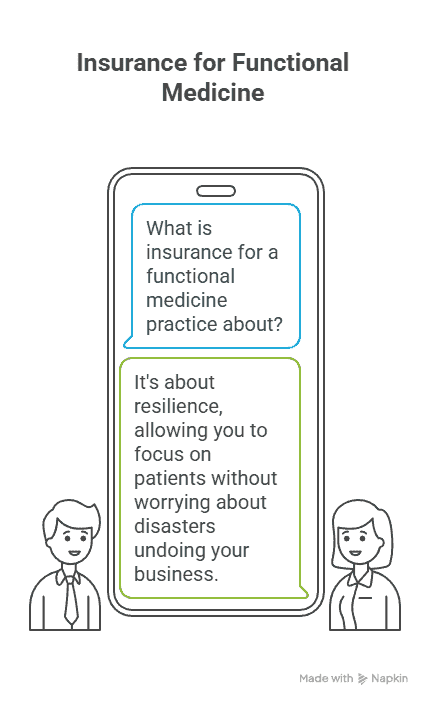
Malpractice protects your reputation as a clinician. The rest of your coverage protects your livelihood as an entrepreneur.
When the unexpected happens — and eventually it will — the goal is to have structured your coverage so that your only disruption is rescheduling tomorrow’s patients, not rebuilding from scratch.
III. The Digital Side of Risk
If the exam room is where functional medicine builds trust, the digital space is where that trust begins.
Today’s patients don’t just find their practitioner online—they form their first impression there. Search visibility, online scheduling, patient education content, and digital reviews all define how a modern clinic is perceived. Yet every piece of that online ecosystem carries hidden exposure.
And the more visible your clinic becomes, the more important protection becomes.
The Digital Revolution in Functional Medicine
The pandemic accelerated telehealth adoption by nearly a decade, and functional medicine practices were among the quickest to adapt. Virtual consultations, patient portals, and cloud-based EHR systems allowed doctors to deliver holistic care from anywhere.
At the same time, marketing shifted sharply online. SEO-driven blog posts, patient case studies, and supplement e-commerce became routine. Some clinics even operate hybrid models—half consultation, half retail.
But as the practice model modernized, many practitioners overlooked one detail: more technology means more risk vectors.
Data that used to live in locked file cabinets now moves through Wi-Fi networks, shared drives, and third-party software. Every connection point is an opportunity for something to go wrong—from a cyber breach to a reputational misstep.
Cybersecurity: The Invisible Front Line
For most functional medicine practices, the first major digital risk is data security. Patient data is among the most sensitive information protected under federal law. Even a small breach—an email account compromise, a stolen tablet, or an insecure Wi-Fi connection—can trigger both state and HIPAA notification requirements.
That means legal counsel, forensic IT investigation, and patient notifications—costs that can easily exceed $100,000 for a single incident.
Cyber Liability Insurance helps absorb these costs and coordinate response efforts. Most policies include:
- Data restoration and system repair after a breach
- Patient notification and credit monitoring costs
- Ransomware negotiation and payment assistance
- Legal and regulatory defense (HIPAA, state data laws)
- Public relations and reputation recovery services
Carriers are now offering lightweight cyber endorsements that integrate with Business Owner’s Policies (BOPs), making it practical even for smaller clinics.
Example: A functional medicine office in Columbus fell victim to a phishing attack. A staff member clicked an email posing as a lab vendor, allowing malware to lock the EHR system. With Cyber Liability Insurance, the clinic was able to pay for data recovery, notify 1,200 affected patients, and hire a PR consultant—all without dipping into operating capital.
Reputation Management and Online Reviews
Every clinic knows how powerful patient testimonials can be. But one negative review, social media dispute, or privacy misstep can spread just as quickly.
Reputation damage isn’t typically covered by malpractice or general liability insurance. However, some carriers now include personal and advertising injury protection as part of commercial liability policies. This may cover claims of libel, slander, or copyright infringement arising from your online content.
Still, the best protection is proactive:
- Have a clear social media policy for staff.
- Avoid sharing any case details online without signed consent.
- Respond to negative reviews professionally—never defensively.
- Maintain disclaimers on blog posts clarifying that online content is for education, not diagnosis.
SEO and reputation are inseparable. The same factors that make a clinic visible—blogs, testimonials, and Google Maps profiles—also create potential exposure. An intentional, well-documented online strategy mitigates risk on both fronts.
Pro Tip: If your marketing involves patient success stories, ensure every testimonial is backed by a written HIPAA-compliant release. A single privacy complaint can become an expensive lesson in digital compliance.
Website Liability and Copyright Risks
Few clinics realize that they can face legal exposure from the content on their own websites. Using stock images without commercial rights, reposting medical research without permission, or embedding patient testimonials without consent can lead to copyright or defamation claims.
Professional media liability—sometimes included in cyber or advertising injury coverage—protects against:
- Alleged copyright or trademark infringement
- Misuse of third-party photos or videos
- Defamation through blog content
- False advertising claims related to supplements or procedures
Example: A clinic used a before-and-after photo on their website that had been posted by another provider years earlier. When the original author issued a copyright demand, the clinic’s carrier stepped in to handle legal defense and settlement.
These cases are rare—but when they occur, they’re devastating for small businesses unprepared to absorb legal costs.
SEO Growth = Expanded Risk Surface
The more visible your clinic becomes online, the more entry points you create—both for opportunity and liability.
Functional medicine practices that embrace blogging, email marketing, and telehealth must think like small digital enterprises. Every email list, web form, and login portal represents both a marketing asset and a liability.
SEO, after all, doesn’t just attract patients. It attracts attention.
That’s where the partnership between digital growth and insurance protection becomes powerful. While FunctionalMedicineSEO helps practitioners expand reach and authority, agencies like Ingram Insurance ensure that exposure remains manageable as clinics grow.
In practical terms:
- As your audience grows, so does your data liability.
- As your website expands, so does your copyright exposure.
- As your brand becomes recognizable, so does your reputation risk.
Smart clinics protect their online growth just as seriously as they protect their physical offices.
Telehealth, AI Tools, and the New Era of Liability
Telehealth has blurred the line between clinical practice and digital business. Functional medicine practitioners now use video conferencing platforms, wearable integrations, and AI-assisted health assessments.
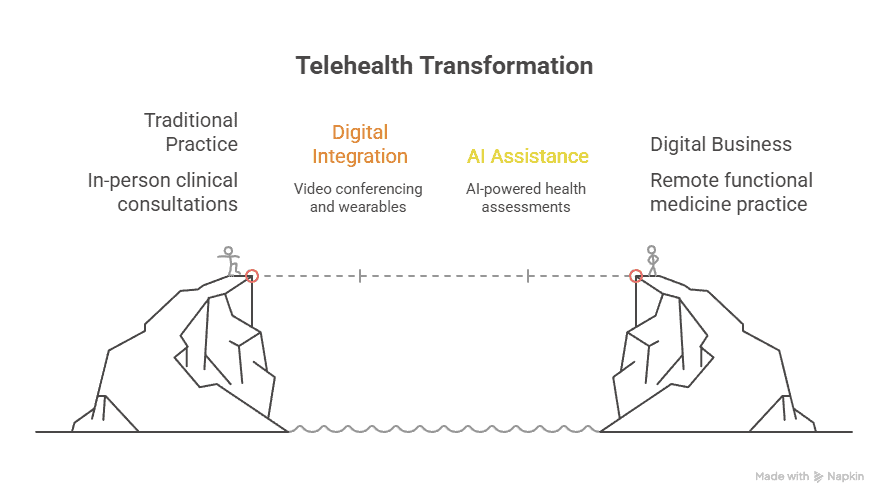
These innovations create new legal and insurance gray areas:
- What if a telehealth session freezes mid-consultation and the patient misinterprets your advice?
- What if an AI-generated nutrition plan includes incorrect guidance that leads to harm?
- What if sensitive biomarker data syncs to a patient’s personal device and is later breached?
While malpractice may cover direct treatment claims, cyber liability and professional liability extensions are critical for these tech-driven scenarios.
Many insurers are beginning to create hybrid endorsements for telehealth operations, combining both clinical and digital coverage into one streamlined policy.
Example: A Cleveland-area clinic faced a dispute when a telehealth video lag caused a miscommunication about supplement dosing. While the incident didn’t result in a malpractice suit, the clinic’s professional liability policy provided legal consultation and documentation support—preventing the issue from escalating.
Blending Visibility with Protection
Functional medicine is built on prevention. The best practitioners teach patients how to stay ahead of illness instead of reacting after it happens. Insurance works the same way: it’s not about fixing damage after the fact—it’s about staying prepared enough that damage never interrupts the mission.
So as your clinic grows online, treat your digital presence the same way you treat your patient protocols: proactive, intentional, and evidence-based.
- Regularly review your IT vendor’s security measures.
- Maintain written privacy and review policies for all staff.
- Integrate Cyber Liability, Advertising Injury, and Reputation Protection into your business coverage.
- Partner with SEO and insurance professionals who understand your unique exposure.
The same strategies that build trust online can also keep your operations secure offline.
Visibility is powerful—but it’s only valuable when you can safely sustain it.
IV. Real-World Case Scenarios — When the Unexpected Happens
Insurance only feels abstract until something goes wrong.
Functional medicine clinics, like any small business, face moments where one ordinary day turns into a crisis. The good news? The right coverage transforms those crises from existential threats into manageable detours.
Let’s explore four realistic examples drawn from the kinds of claims we see in wellness, medical, and holistic settings every year.
1. The Power Surge That Silenced a Clinic
Scenario:
A mid-sized functional medicine clinic in Dayton operated several advanced diagnostic devices — an InBody scanner, ozone therapy equipment, and a high-efficiency HVAC system. After a summer thunderstorm, a sudden power surge fried multiple circuit boards and damaged the main refrigeration unit storing specialty supplements.
The Aftermath:
- $38,000 in total equipment damage
- $6,000 in spoiled supplement inventory
- Two weeks of appointment cancellations while the systems were replaced
How Insurance Responded:
- The clinic’s Property Insurance covered the physical damage.
- Their Equipment Breakdown endorsement addressed the mechanical and electrical failure (something standard property policies exclude).
- Business Interruption coverage reimbursed lost income for the closure period.
Lesson:
Functional medicine practices depend on electricity for almost everything — from freezers and lab gear to air filtration and digital check-ins. A single surge or power loss can halt operations. Property coverage alone isn’t enough; equipment breakdown fills that critical gap.
2. The Cyber Breach That Hit Close to Home
Scenario:
A Cincinnati-based integrative health center prided itself on digital convenience — online scheduling, automatic billing, and patient portals. But one morning, staff noticed dozens of appointment reminders sent from an unfamiliar domain. Within hours, they learned their email account had been compromised, and a hacker had accessed thousands of patient records.
The Aftermath:
- 1,600 patient profiles exposed
- Estimated $110,000 in forensic and legal expenses
- HIPAA reporting and mandatory patient notifications
- A short-term loss of patient trust
How Insurance Responded:
- Their Cyber Liability policy paid for forensic investigation and data recovery.
- The carrier covered patient notifications and provided credit monitoring for affected individuals.
- A public relations consultant helped manage messaging and repair online reputation damage.
Lesson:
Even small clinics are targets. Cybercrime doesn’t discriminate by business size — it looks for opportunity. For functional medicine practices that store health data and credit cards in the same system, cyber coverage isn’t optional; it’s essential.
3. The Negative Review That Escalated
Scenario:
An Ohio practitioner received a harsh Google review from a former patient who misunderstood a billing charge. The review included false statements implying fraudulent practices. The clinic owner responded directly online, attempting to correct the record — but inadvertently included enough detail that the patient claimed a HIPAA violation.
The Aftermath:
- Public complaint to the state medical board
- A small but costly legal dispute over alleged defamation and privacy breach
- Temporary dip in Google rankings as local sentiment spread
How Insurance Responded:
- The clinic’s Commercial General Liability included Personal and Advertising Injury coverage, which helped pay for legal defense.
- The carrier’s reputation management partner provided a compliance review and helped the owner draft an official response plan.
Lesson:
In an age where reviews equal reputation, the wrong response can amplify the risk. Functional medicine doctors must train their teams to respond professionally and never disclose patient information online. Advertising injury coverage is a quiet hero in these situations — especially for practices investing heavily in SEO and content.
4. The Fire That Tested Everything
Scenario:
A functional medicine office in Columbus shared a plaza with a salon and yoga studio. One evening, a fire started in the neighboring tenant’s dryer vent and spread into the clinic’s ceiling. Though flames were contained, the smoke damage rendered the suite uninhabitable for weeks.
The Aftermath:
- $80,000 in interior and equipment damage
- $24,000 in lost revenue during downtime
- Displacement to a temporary coworking space
How Insurance Responded:
- Commercial Property coverage repaired interior walls, flooring, and fixtures.
- Business Interruption insurance covered lost income while repairs were made.
- Extra Expense coverage paid for the temporary coworking rental.
Lesson:
Even when your business isn’t the source of the damage, shared building exposure can shut you down. The right combination of property, interruption, and extra expense coverage ensures you can relocate and resume work quickly — preserving patient trust and financial stability.
The Common Thread: Preparedness
What unites these examples isn’t misfortune — it’s the way preparedness turned chaos into calm. In every case:
- The clinic had partnered with an independent insurance agent who understood the medical-wellness crossover.
- Coverages were customized for operations, not just occupations.
- Policies were reviewed annually to account for growth, new services, and technology.
That last point matters most. The clinics that thrive after loss are rarely the ones with the cheapest premiums. They’re the ones that documented every asset, clarified every role, and treated insurance as a preventive wellness plan — not a transactional formality.
Functional medicine practitioners already understand this philosophy intuitively. You don’t wait for a patient’s symptoms to spiral before intervening — you build resilience from the start. Business insurance, approached correctly, works exactly the same way.
The Takeaway for Growth-Minded Practitioners
As your clinic expands — adding employees, supplements, telehealth, or a second location — your risk map changes. What once worked for a one-room practice no longer fits a multi-service wellness hub.
The key is proactive alignment between your clinic’s business plan and your insurance strategy.
That’s where independent agencies like Ingram Insurance excel:
- They’re not locked to one carrier’s policies or exclusions.
- They compare multiple insurers to balance price and protection.
- They understand that “wellness” and “medical” aren’t mutually exclusive — and coverage shouldn’t treat them that way.
When your clinic embodies health, balance, and foresight, your insurance program should too.
V. Strategic Growth and Long-Term Risk Planning
For most functional medicine doctors, building a successful practice isn’t about scaling fast — it’s about scaling intentionally. You grow your clinic the same way you guide your patients: through small, evidence-based decisions that create long-term stability.
The same philosophy applies to insurance. As your business matures, your risk profile changes — sometimes dramatically. A single new service, a hired practitioner, or a move into e-commerce can transform how liability is distributed and how your coverage needs to respond.
This section outlines how to grow safely, confidently, and sustainably.
1. Scaling from Solo Provider to Team-Based Practice
Many functional medicine clinics start with one or two providers and a shared receptionist. As word spreads and patient demand grows, the team expands: a nurse practitioner, a nutritionist, a health coach, or even an acupuncturist joins the mix.
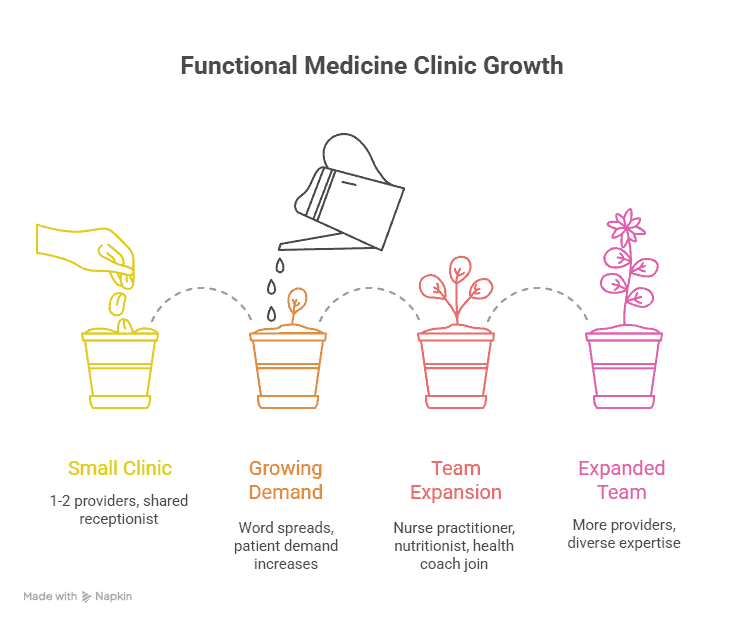
That’s when things get complex.
Each new professional carries a unique set of risks and licensing requirements. You’re no longer insuring a single practitioner — you’re insuring a multi-disciplinary care model.
Key considerations include:
- Professional Liability Alignment: Ensure every practitioner’s scope of practice is defined in the policy. Some carriers exclude non-licensed roles (like health coaches) unless specifically endorsed.
- Shared-Space Liability: If practitioners sublease rooms or share utilities, clarify which party’s insurance applies to which spaces.
- Employment Practices Liability Insurance (EPLI): Once you hire staff, EPLI becomes essential. It protects against allegations of wrongful termination, discrimination, or harassment — the types of claims that can devastate a small practice regardless of merit.
Example: A growing clinic added a part-time wellness coach under contract. When a scheduling conflict caused a miscommunication with a patient, both the doctor and coach were named in a complaint. Because the coach’s role hadn’t been documented in the insurance policy, coverage was initially delayed. A simple update during renewal would have prevented it.
As your team expands, so should your policy documentation and annual reviews. Growth doesn’t just add opportunity — it adds accountability.
2. Adding Telehealth and Hybrid Services
Telehealth is now a permanent fixture in functional medicine.
It extends your reach, allows flexible scheduling, and keeps patient continuity strong. But it also introduces complex legal and coverage nuances — especially across state lines.
Insurance considerations include:
- Licensure Territory: Malpractice and professional liability policies are usually tied to state practice laws. If you treat out-of-state patients, your coverage must extend geographically.
- Platform Security: Verify that your video, chat, and data tools meet HIPAA compliance. A breach through a third-party vendor can still be your legal responsibility.
- Informed Consent for Telehealth: Digital delivery doesn’t change duty of care — but it does change documentation. Policies should reflect telehealth-specific protocols.
Some carriers now offer dedicated telemedicine riders that explicitly include coverage for remote diagnostics, supplement consultations, and digital patient communications.
Tip: If you’re marketing across states but only licensed in one, clarify the distinction between education and care. SEO-optimized blogs and videos that offer “health advice” can unintentionally blur that line. Insurance won’t always protect you from unlicensed practice allegations if your content reads as medical instruction.
3. Expanding into Retail or Supplements
Many functional medicine practices supplement their clinical revenue by selling nutraceuticals, lab kits, or wellness products. It’s a smart business model — but it shifts you into the world of product liability and retail regulation.
You’ll need to confirm:
- Your policy includes Product Liability Coverage for any goods you sell, even if manufactured elsewhere.
- Inventory coverage applies to retail stock and on-site sales.
- If you sell online, your e-commerce exposure (including interstate sales and shipments) is acknowledged in your general liability declarations.
Example: A patient reacts to a supplement purchased directly from your office. Even though it’s a third-party product, your clinic is part of the supply chain — and therefore named in the lawsuit. A $300 annual product liability endorsement can prevent a $30,000 legal expense.
If you use affiliate links or online storefronts, review your policy wording carefully. Some insurers exclude “offsite e-commerce” unless disclosed.
4. Moving or Expanding Locations
Whether upgrading from a single suite to a multi-office facility or opening a second location, relocation changes everything — from property values to employee classifications.
Checklist for your agent:
- Recalculate Property Values: Construction type, square footage, and neighborhood impact replacement cost.
- Add Additional Insureds: New landlords or property managers will require updated certificates.
- Duplicate Coverages: Don’t assume the same policy automatically extends to new premises.
- Reassess Business Interruption Limits: Rent, utilities, and payroll often rise faster than coverage limits if not reviewed.
For practices with multiple locations, insurers can often consolidate policies under a Master Program, simplifying billing and streamlining renewals.
Pro tip: Time your insurance update before the move — not after. Most losses occur during construction, setup, or renovation, and claims during that window can fall into coverage gray zones if your policy hasn’t been adjusted.
5. Building Long-Term Resilience
Sustainable protection doesn’t just mean having the right coverages — it means maintaining financial and operational resilience.
Here’s how to think holistically:
- Annual Policy Reviews: Just as you track biomarkers, review your insurance annually for “risk biomarkers” — new exposures, outdated limits, or uncovered assets.
- Umbrella Protection: Once your revenue or assets exceed $500,000, an umbrella policy becomes indispensable. It adds millions in liability protection for very little cost.
- Disaster Preparedness: Back up EHR data securely, maintain emergency contact protocols, and document every asset digitally.
- Succession & Continuity Planning: Life and disability coverage for key owners ensures your business survives the unexpected — not just your building or devices.
Analogy: In functional medicine, resilience comes from balanced systems — immune, endocrine, metabolic. In business, resilience comes from balanced protection — property, liability, and continuity. Ignore one system, and the others eventually strain.
6. Aligning Growth with Patient Trust
The most successful clinics don’t treat insurance as compliance — they treat it as part of their brand trust. Patients sense when a practice is organized, secure, and transparent. They value consistency in billing, privacy, and safety.
Coverage indirectly shapes that perception.
A well-insured clinic:
- Handles disruptions gracefully
- Communicates confidently about data protection
- Shows longevity through preparedness
These things matter to patients looking for continuity of care.
If your clinic is expanding or you’re launching a new program, share that evolution publicly. Transparency about your investment in infrastructure and safety demonstrates professionalism — and can even improve SEO signals when integrated into your site’s About or FAQ pages.
7. Partnering for the Long Term
An independent insurance agency functions best as part of your advisory team — alongside your CPA, attorney, and digital strategist. The goal isn’t just to write policies; it’s to understand trajectory.
Ingram Insurance approaches coverage like functional medicine approaches health:
- We start with assessment.
- Identify root causes of risk.
- Build custom solutions.
- Reevaluate and optimize over time.
Because protection isn’t a one-time prescription — it’s an evolving protocol.
Final thought: You built your practice on the idea that prevention is better than cure. The same wisdom applies to your business. A proactive risk plan gives you the freedom to focus fully on patients, growth, and impact — knowing your foundation is secure.
VI. Bringing It All Together: Insurance That Grows With Your Functional Medicine Practice
Functional medicine succeeds by thinking systemically—treating root causes, not symptoms. The same mindset unlocks resilience for your clinic. When your insurance strategy tracks with how you practice—whole picture, long horizon—you avoid expensive surprises and build a durable brand patients trust.
What “Good” Looks Like (A Quick Recap)
- Right-size your professional liability to match your current scope (nutrition consults, health coaching, IV therapy, lab interpretation, telehealth, etc.).
- Document roles and locations as you add NPs, RDs, coaches, acupuncturists, or second sites. Endorse new services before launch, not after.
- Cover the business engine—property, tenant improvements, equipment, and business interruption—so a small incident doesn’t become an existential crisis.
- Protect the digital front door with cyber + privacy coverage aligned to EHRs, telehealth platforms, and e-commerce for supplements or programs.
- Plan for people-risk via EPLI (hiring, firing, harassment), directors & officers (governance), and umbrella limits as revenue and assets grow.
- Review annually like a clinical recheck: update limits, add endorsements, remove what you don’t need, and benchmark pricing across carriers.
A 10-Minute Owner’s Checklist
- Scope map: List every service you offer (in person + telehealth) and the credentials delivering them. Are they all named on your policy?
- People map: W-2 vs. 1099, who supervises whom, and where they practice. Do agreements require proof of insurance and additional insured status?
- Property realities: Current replacement cost on build-out and equipment? Any recent upgrades or a move planned in the next 12 months?
- Revenue continuity: How many months of business income coverage do you carry if your space or systems go down?
- Data posture: MFA on all admin logins, signed BAAs for vendors, and cyber coverage that includes ransomware + social engineering?
- People protection: EPLI in place? Clear job descriptions? Training logs? A simple incident-report workflow?
- Umbrella alignment: Do your excess limits reflect your revenue, personal assets, and risk tolerance?
Positioning Your Clinic for the Next Stage
Growth often arrives in inflection points: adding telehealth across state lines, launching a supplements store, hiring your first NP, opening a second location. Each move changes your risk pattern—and your coverage should evolve in lockstep. That doesn’t mean “more insurance for the sake of more”; it means precision and timing: endorse what’s new, strengthen what matters, and trim anything that no longer serves your model.
SEO, Trust, and Patient Experience
Operational maturity is now part of your marketing. Patients (and search engines) reward clear communication, consistent experiences, and reliable availability. A well-insured practice tends to be a well-run practice: fewer disruptions, faster recoveries, and higher trust. Put simply—your risk plan is a quiet growth lever.

Where to Go From Here
1) Tune your visibility: If you want more of the right patients, partner with specialists who understand how functional medicine grows online. Explore tailored SEO strategies at FunctionalMedicineSEO.com.
2) Fortify your foundation: If you want coverage that actually fits your clinic—property, liability, cyber, EPLI, and umbrella—talk with an independent agency that speaks your language. Start a no-pressure review with Ingram Insurance (we don’t sell medical insurance; we focus on the business lines that keep your practice running).
Copy-and-Use Conversation Starters (Email Your Agent)
- “Please confirm my policy names all services we deliver (including telehealth, nutrition, health coaching, IV therapy, and supplement sales).”
- “Do we have cyber coverage that includes ransomware, social engineering, and funds-transfer fraud for our EHR and e-commerce?”
- “Is our business income limit enough to cover 6–12 months if we can’t occupy the space?”
- “Do we have EPLI and an umbrella aligned with our revenue and assets?”
- “We’re adding a new practitioner/location—what endorsements and certificates are needed before we go live?”
Final Word
You help patients build resilient health by aligning habits to long-term goals. Do the same for your practice: align your insurance to your growth plan, review it like a protocol, and keep everything documented. The payoff is simple—clarity, continuity, and the freedom to focus on care.
Ready when you are: dial in your demand with FunctionalMedicineSEO.com, and lock in your protection with Ingram Insurance. We are only licensed to sell property & casualty insurance risks in: OH, WY, IN, KY, PA, NC, TN.